History Changsha
Changsha is among the 24 cities in China which have been first listed by the government as famous historical and cultural cities. The earliest inhabitants settled in Changsha about 7,000 years ago, and the city has a written history of more than 3,000 years. During the Xia and Shang dynasties, Changsha belonged to the ancient Sanmiaoyuan land; in the Spring and Autumn and the Warring States periods, it was an important economic, |
|
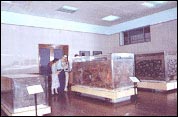
cultural, and military town of southem Chu state. In 221 BC, Emperor Qin Shihuang unified China, and placed Changsha as one of its 36 towns. In Han Dynasty, it was the capital of Changsha State; it belongs to Wu State during the Three Kingdowm period. It was renamed as to Tanzhou several times during Sui and Tang dynasties. It was under Jinghu South Road in Song Dynasty, and renamed as Changsha Prefecture in Ming Dynasty. It became a part of Hunan Province in Qing Dynasty, and was renamed as the capital of Hunan Province in 1922. in 1933, it was chosen as Changsha City, and it was peacefully liberated on August 5, 1949. The long history and the brilliant culture of Changsha leave abundant cultural heritage for Changsha people. A great number of historical relics have been unearthed such as the ancient ceramics of about 7,000 years ago, the unearthed antiques in Mawangdui Han Dynasty Tomb of over 2,000 years ago, the biggest bronze musical instruments in China made and used in the Shang Dynasty (21st-16th century BC), and the first academy among the four ancient academies in China-Yuelu Academy, as well as large amounts of bamboo and wooden books made in the Three Kingdoms Period, the earliest map, the first writing brush and the first steel sword ever found in China. All these make the ancient city Changsha full of charm and attraction.
Climate Changsha
|
The climate in Changsha has sub-tropical characteristics and is there fore very humid all year round. The city has clearly defined seasons, with an average temperature of 16.8-17.2 degrees Centigrade, reaching 40 degrees in summer and dropping to 1 or 2 degrees below zero in winter. With an average sunshine of 1,726 hours a year, it enjoys a long frost free period as long as 279.3 days per year on average. |
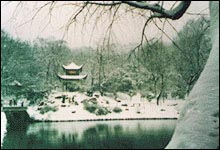
Spring arrives March 22, which brings pleasant time back to the city featuring green crop fields, colorful flowers, butterflies during the day and the constant singing of frogs by the ponds at night. The dog days begin in the latter part of May, and the high temperature during this period make Changsha one of the "ovens" in China However, one may easily escape the heat to spend one's holidays in a number of summer resorts situated in the mountains located in the suburbs, where lakes, shade provided by trees and cool air make the dream of mid-summer come true. The date of September 19 usually heralds the arrival of autumn, when the leaves covering the mountains turn red, providing a sharp contrast with the crystal-blue water of the Xiangjiang River running nearby. Winter comes at the latter part of November. Changsha has a great deal of snow during winter. But the snow does not last long, giving way to the green vegetation again as soon as the sun re-appears.
Economy Changsha
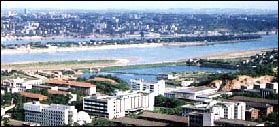
Changsha is the capital of Hunan Province, and there are five districts and four counties under its jurisdiction. It's now serving as the province's political, economic and cultural center. Before 1949, when new China was founded, the economy was underdeveloped and the local industry was virtually non-existent. The last 50 years have seen a tremendous change in Changsha's economic development and urban construction. |
|
In 1998, it realized 54,285 billion yuan of GNP, and its GDP accounted for 16.9 percent of the provincial total. Its proportion of the primary, secondary and tertiary industries was 12.9, 42.9, and 44.2 respectively, its economic growth was four percentage points higher than the province's average; the local government had a revenue of 3.026 billion yuan; the per capita income of urban residents was 6,649.99 yuan and that of rural residents was 2,755 yuan, the investment in fixed assets in the city totaled 14.84 billion yuan, and the foreign trade volume totaled $ 260 million including $ 210 million of exports. Changsha plays an important role in Hunan's economic development. Its urban areas are the industrial, trade and financial center of the province. Its rural areas are famous for grain production and pig farming. Among the 32 large cities in China, which have a population of 1 million or more, Changsha ranks the eighth in terms of general economic capacity.
Geography Changsha
|
Changsha is situated in the lower reaches of the Xiangjiang River in northeast Hunan. Its exact location is at 110o53´-114o15´degrees east longitude and 27o51´-28o40´degrees north latitude. To its south are Zhuzhou and Xiangtan, to its west is Yiyang and to its north is Yueyang. |
Changsha borders on Jiangxi Province to the east. Changsha occupies a land of 11,818 sq. km, accounting for 10.12 percent of Hunan. Its city proper occupies an area of 554sq. km.
Changsha has various topographical features, with its highest place in the Qixing Hill of Dawei Mountain standing at 1,607.9 meters above sea level and the lowermost, the Wangxian County, 23 meters above sea level. A large section of northeast Changsha is actually an extending part of the Mufu-Luoxiao mountain ranges, and its north west part is linked with the Xuefeng Mountain. The south and central sections are hilly areas and the north is a plateau. The mountainous areas account for 29.52 percent of Changsha's total area, hilly areas 41.02 percent, plateaus 25.30 percent and lakes and rivers 4.16 percent.
Natural Ecological Environment Changsha
The sub-tropical monsoon climate, clearly defined seasons and sufficient rainfall provide good conditions for vegetation to grow. Summer and winter are longer while spring and autumn are shorter. Here, summer lasts approximately 124 days, winter 110 days, spring 70 days and autumn 61 days. January is usually the coldest time with an average temperature of 4.4-5.1 degrees Centigrade. |
|
The annual precipitation on average is 1,358.6mm-1,552.5mm. Changsha has a number of parks occupying a total area of 575 hectares, which include the Martyrs' Park, Juzhou Park, Tianxin Park, Yuelushang Scenic Area, the Changsha Zoo and several forests and botanic gardens.
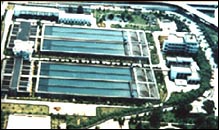
The people's government of Changsha has adopted a sense of measures to improve the local environment and ecology. Environmental protection departments have been established at each level of the government, with a total staff of 333. environmental inspections have become regular, which include monitoring the water quality in the Xiangjiang River and urban wells as well as the air quality in the city areas. In this way these departments have the environmental quality of the city under constant supervision, which provides a scientific basis for preventing and dealing with pollution. It is a requirement that every industrial construction project is built in conjunction with a sewage disposal project, which is a part of its design plan. Up to now Changsha has two sewage disposal plants, with a daily capacity of sewage totaling 250,000 tons. As an ancient cultural midpoint, Changsha used to be home to a great number of literati in the past dynasties, including such famous figures in Chinese history as Qu Yuan, Jia Yi, Li Yong, Li Bai, DuFu, Han Yu, Liu Zongyuan, liu Changqing, Du Mu, Li Shangyin, Du Xunhe, Ouyang Xiu, Fan Chengda, Yang Wanli and yuan Mei, All these masters left their literary creations and calligraphy in the city.
Changsha was also the cradle of development of the Confucian school in Chinese history and in particular during the Song and Ming dynasties. Many famous scholars who made great contributions to the philosophical development made their home here, including Hu Anguo, Zhang Shi and Zhu Xi in the Song Dynasty, Wang Shouren, Zhang Yuanbian in the Ming Dynasty, and Wang Fuzhi in the Qing Dynasty. It was recorded in history that Zhang Zhongjing, one of the founding fat hers of the Chinese medicine theory, used to be the appointed government head of Changsha, and Sun Simiao, the famous pharmacist, lived in the city for a long time. Changsha was the home town of countless accomplished writers, artists and scholars in both ancient and modern times, including Deng Can, Ouyang Xuan, Wang Xianqian, Ouyang Xun, Huai Su, Qi Ji, Li Dongyang, Feng Zizhen, Yi Yuanji, Qi Baishi, Yi Ba, Wang Kaiyun, Yang Enshou, Ouyang Yuqiang and TianHan.
Azalea-the Flower of Changsha
|
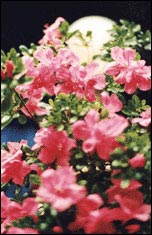
A referendum was conducted in the city in 1985, to choose a symbolic flower for Changsha. Azalea won the majority of votes and this was soon ratified by the city's people's congress.
Azalea is an ever-green bush, usually growing to a height of two meters. Its leaves, about 3-5 cm in length, are oval shaped. The surface of the leaves is dark-green colored and their back light-green. The flowers of azalea, which are in blossom from March to May, are in the shape of a funnel and are magenta in color. Azalea may be planted in the earth or in flowerpots, but they are best grown in the ground because the plant is prone to wet, cool and rich soil with stronger acidity.
|
Camphor Tree-the of Changsha
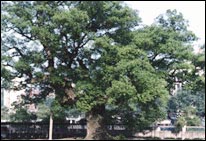
A survey covering 12 main streets in Changsha showed that camphor trees account for 60 percent of the city's vegetation. In 1985, the people's congress of Changsha decided that the camphor tree should be the tree of Changsha, and in the following years 80,000 more such trees were planted in the city.
Camphor trees are typical broadleaf trees growing in subtropical regions. They grow straight and high and are capped by a large and dense crown. The wood of camphor tree is an extremely expensive building material. The flowers of the tree are fragrant, and have a special function which cleans the atmosphere by killing such viruses as tuberculosis, dysentery and diphtheria. |
|
The tree is also ideal for disposing of carbon dioxide, ozone and hydrogen fluoride, contributing greatly to the improvement of the air quality.
|